3D Body Scanning at Cryo SubZero:
What Scaneca Actually Measures and Why It Matters

By Dr. Zeeshan Siddiqui | Founder, Cryo SubZero

This article is for general educational purposes only and does not constitute medical advice, diagnosis, or treatment. 3D body scanning provides anthropometric and postural data to support tracking and education; it is not a substitute for clinical assessment, laboratory testing, or diagnostic imaging.Individual results vary. Please consult your GP or a qualified healthcare provider before making decisions based on scan results, particularly if you have an existing medical condition.
Most people go through life never seeing their own body from the outside the way a coach, a physio, or a surgeon does. You know your weight. Maybe your BMI. Almost nobody knows their waist-to-height ratio, their left-right weight distribution, or whether their posture has quietly shifted over the last two years of desk work. That gap between what you feel and what is actually measurable is exactly what a 3D body scanner is built to close. At Cryo SubZero, we use the Scaneca 3D body scanner, a Germanengineered system developed in partnership with Humboldt University of Berlin, to give clients an objective, full-body readout in under a minute. No blood draw, no compression cuffs, no guesswork.
How the scan actually works
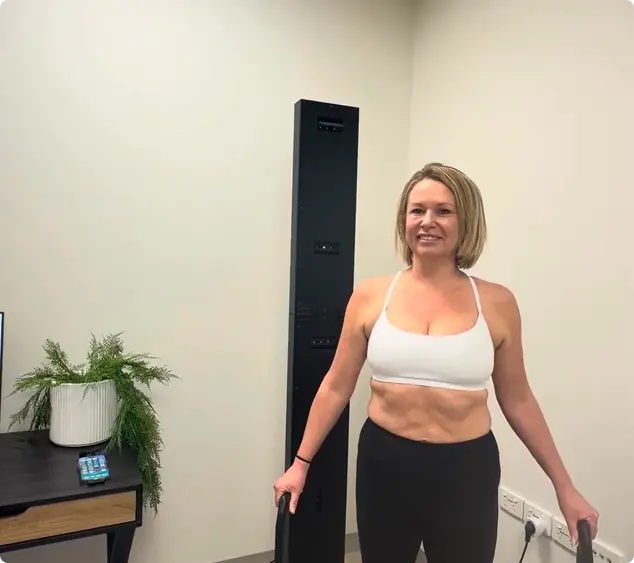
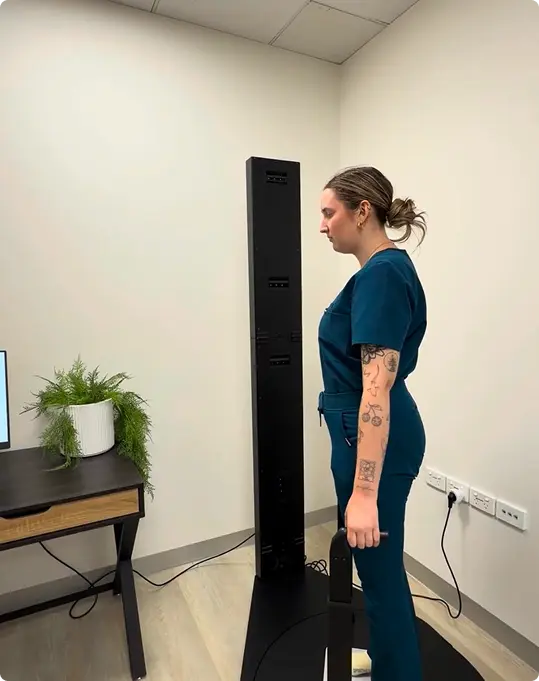
Scaneca uses contact-free optical scanning. You stand in a fixedposition for a few seconds while the system captures your entire body surface and builds a detailed 3D point cloud, then renders it into a rotatable avatar you can view from every angle. There is no radiation, no compression, and nothing touches your body, which is the same underlying principle used in 3D photonic and infrared surface scanners that have been validated in clinical anthropometry research over the past decade. A 3D body scanner is a non-invasive, non-contact system that uses infrared technology and surrounding cameras to capture information and calculate a detailed body shape map through optical triangulation, with a full scan typically completing in seconds rather than minutes.
The evidence behind 3D scanning
3D anthropometry is not a novelty. Peer-reviewed research comparing 3D surface scan data against bioelectrical impedance analysis has found that 3D scan models performed better than standard anthropometric measurement models at predicting body fat, visceral fat, and skeletal muscle mass, making a strong case for using 3D full body surface scans in place of single tape-measure readings. Reliability studies on 3D infrared surface scanning have also shown good feasibility and validity when benchmarked against classical anthropometry and established metabolic syndrome markers. It is worth being precise about what this technology is and is not. Dual-energy X-ray absorptiometry (DXA) remains the clinical gold standard for body composition. 3D optical scanning is a fast, noninvasive, highly repeatable surface measurement tool that correlates well with composition and risk markers, not a diagnostic replacement for DXA, MRI, or a blood panel. We present it to clients as exactly that: a precise tracking and education tool, not a medical test.
📏 Circumferences and volumes
Waist, hip, chest, thigh, and arm circumferences are captured automatically and consistently, removing the human error that comes with a tape measure pulledslightly tighter one week than the next.
💪 Body composition
Weight, lean mass, body fat percentage, and FatFree Mass Index (FFMI) give a more complete picture than the bathroom scale, which cannot tell you whether a change in weight is fat, muscle, or water.
📊 BMI, in context
BMI is included because it is still widely referenced, but it has a well-documented blind spot: it is a simple and suboptimal indicator of individual body fatness because it cannot distinguish between weight linked to fat mass and weight linked to lean mass, and it says nothing about fat distribution, which is what actually drives individual health risk. That is exactly why Scaneca also reports waist-to-hip and waist-to-height ratios alongside it.
📐 Waist-to-height ratio (WHtR)
This is the number worth paying the most attention to. WHtR has emerged as a simple and powerful predictor of central obesity and cardiometabolic risk, and multiple systematic reviews and meta-analyses have found it outperforms both BMI and waist circumference in predicting type 2 diabetes, hypertension, dyslipidaemia, and cardiovascular disease. It also provides a standardised cut-off point of roughly 0.50 that applies across sexes, ages, and ethnic groups, which is part of why it has become a preferred screening measure in recent population health research.
⚖️ Posture and load distribution
The scanner detects how your weight is distributed left to right through your feet, along with the key distances and angles that indicate postural asymmetry, such as uneven shoulder height, pelvic tilt, or forward head posture. Seeing this visually, rather than being told about it verbally, is what makes the finding land and makes people actually follow through on correcting it.
🔥 Basal metabolic rate
An estimate of the energy your body burns at rest, useful context for anyone adjusting training load or nutrition targets.
Contraindications and honest limitations
Because the scan is contact-free and uses no radiation, there is no physical contraindication in the way there is with cryotherapy or HBOT. That said, a few things affect result quality and interpretation:
• Clothing and positioning. Loose or bulky clothing, and inconsistent standing position between sessions, can introduce measurement variation. We standardise this at Cryo SubZero to keep your progress data comparable scan to scan.
• Hydration and recent food intake. As with any body composition method, being significantly dehydrated or having just eaten a large meal can shift the numbers slightly. We advise a consistent pre-scan routine.
• Not a diagnostic tool. A concerning posture finding or a high WHtR reading is a prompt to speak with a GP or physiotherapist, not a diagnosis in itself.
• Pregnancy and paediatric use. Interpretation thresholds for measures like WHtR differ substantially in children and are not standardised the same way as in adults, so results in these groups should be read with more caution and ideally alongside a clinician.
• Data privacy. Your scan data, including the 3D avatar, is stored securely and only used to track your own progress over time.
The Cryo SubZero difference
We do not just hand you a print-out and send you on your way. Your Scaneca scan becomes the baseline we use to actually justify and direct your recovery plan, whether that is targeted cryotherapy for an asymmetric loading pattern we can see on the posture analysis, HBOT and lymphatic drainage as part of a broader recomposition plan, or simply a re-scan every few weeks so you can watch your own progress with your own eyes rather than trusting a mood based on how your jeans fit that day. Every result, including the 3D avatar, is stored and can be pulled up and compared at any future visit, on screen, printed, or emailed to you. It is one part of the same evidence-based approach we apply across whole-body cryotherapy, dualoccupancy hyperbaric oxygen therapy, red light therapy, and the rest of the Cryo SubZero programme.
The honest close
A 3D scan will not replace your GP, and it will not diagnose disease. What it will do is give you a number instead of a feeling, and a picture instead of an assumption. For most people that alone changes how seriously they take their own recovery and training decisions. Combined with the rest of what we do at Cryo SubZero, it becomes a genuinely useful compass rather than another wellness gadget collecting data nobody looks at.
References
- Jaeschke L, Steinbrecher A, Pischon T. Associations between 3D surface scanner derived anthropometric measurements and body composition in a cross-sectional study. Eur J Clin Nutr. 2023. nature.com/articles/s41430-023-01309-4
- Associations between 3D surface scanner derived anthropometric measurements and body composition in a cross-sectional study. PMC ncbi.nlm.nih.gov/pmc/articles/PMC10564621
- Validity and reliability of total body volume and relative body fat mass from a 3-dimensional photonic body surface scanner. PMC ncbi.nlm.nih.gov/pmc/articles/PMC5495384
- SMRT: A smart mass ratio technique that outperforms body mass index (BMI) for predicting waist-to-height ratio. PMC, 2025. ncbi.nlm.nih.gov/pmc/articles/PMC12914367
- Predicting cardiometabolic risk: waist-to-height ratio or BMI. A meta-analysis. PubMed. pubmed.ncbi.nlm.nih.gov/24179379
- Waist-to-height ratio and cardiovascular risk: moving beyond BMI in aging populations. The Lancet Regional Health – Americas, 2026. thelancet.com
- SCANECA GmbH. Product information and technical overview. scaneca.com