Hyperbaric Oxygen Therapy
The AFL Recovery Arms Race: What Actually Works Between Games

By Dr. Zeeshan Siddiqui, Founder · 4 min read

This article is for general information and educational purposes only and does not constitute medical advice. Cryotherapy, hyperbaric oxygen therapy, and other modalities discussed are not a substitute for diagnosis, treatment, or rehabilitation guidance from a qualified medical practitioner, physiotherapist, or strength and conditioning professional.
Twenty-two days. That is how long Lachie Neale had to go from a calf injury that was supposed to end his season to lining up in the 2025 Grand Final. Scans said six weeks. Neale played anyway, came off the bench, and kicked the goal that broke Geelong's spirit. Whatever program got him there, it was not luck. It was a recovery plan built around returning a body to full output in a fraction of the normal timeline. That is the real story behind every AFL medical department right now. Finals footy runs on compressed turnarounds, and the gap between clubs is no longer about who trains hardest. It is about who recovers fastest without giving anything up in the process.
Cold water immersion works, but it has a catch
Ice baths are still the most researched recovery tool in football. A recent systematic review of cryotherapy and compression in football players found cold water immersion at 10 to 15 degrees for 10 to 15 minutes meaningfully cuts muscle soreness and speeds performance recovery compared with doing nothing. That is not in question. Clubs are right to use it. Here is what most players are never told. Multiple controlled trials, including a widely cited study out of the University of Queensland, found that regular post-training cold water immersion blunts the muscle-building signal from resistance training. A 2026 meta-analysis of these trials confirmed the pattern: repeated cold exposure after strength sessions produces a moderate negative effect on strength gains, with hypertrophy taking a hit too. The mechanism is straightforward. Cold reduces the blood flow and inflammatory signalling that muscle needs to adapt and grow.
The nuance that gets lost in most gym conversations: ice baths are excellent for getting through a finals series, and a liability during a pre-season strength block. Using the same tool for both jobs is where teams lose ground without realising it.
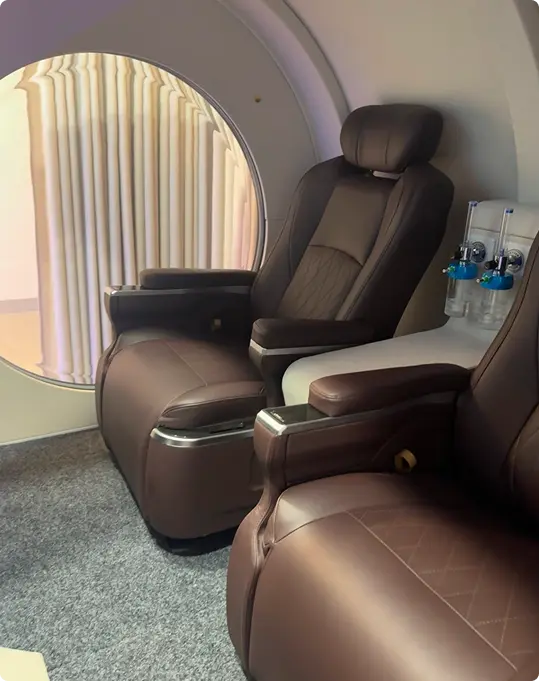
Why hyperbaric oxygen is showing up everywhere
Hyperbaric oxygen therapy has moved well past the wellness trend stage. Spanish and American national football squads have built it into World Cup preparation specifically to manage fatigue and heat stress across compressed schedules, and it is now used in Premier League and Olympic recovery programs. A randomised controlled trial on footballers found HBOT after a match supported physiological markers tied to fatigue clearance and tissue repair. Separate research comparing HBOT against standard rehabilitation alone reported shorter recovery timelines when hyperbaric sessions were added to the usual program. The mechanism makes sense once you understand pressure physiology. Breathing oxygen at increased atmospheric pressure allows more oxygen to dissolve into blood plasma, helping oxygen reach tissue affected by reduced circulation. For some soft-tissue injuries, this may support the repair process.
Where Cryo SubZero fits into this picture
This is exactly the gap we built Cryo SubZero to close. Our whole-body cryotherapy chamber runs at minus 115 degrees, which means a two-to-three-minute session delivers a strong systemic cold exposure without the joint stiffness and wet recovery kit that comes with an ice bath. For a player who trains again in six hours, that time saving is not a luxury. It is the difference between recovering and simply surviving the schedule. On the hyperbaric side, our chamber is dual occupancy. This means a young athlete can complete a session with a parent alongside them, and an NDIS client can bring a support worker into the chamber. We also built Cryo SubZero as a multi-modality facility rather than a single-service clinic. Red light therapy, infrared sauna, halotherapy and lymphatic drainage are available under one roof. Each modality has its own evidence base, and we do not claim that combining them multiplies their effects. What we do offer is convenience, consistency and one team overseeing the complete recovery plan, with Dr Aftab Samdani providing clinical oversight.
The honest bottom line
None of this replaces physiotherapy, strength and conditioning, or a properly periodised training block. Recovery technology is an accelerant, not a substitute for the program your body actually needs. The smart approach is to match the tool to the moment: cold exposure and cryotherapy during a finals stretch when immediate output matters more than adaptation, and a lighter touch during pre-season blocks when you want the training stress to produce strength and muscle adaptations. If Neale's calf taught the league anything, it is that the margin between six weeks out and a Grand Final goal can come down to how effectively recovery is managed, not only how hard rehabilitation is worked.
References
- Sable et al. The Role of Cryotherapy and Compression Therapy in Improving Football Players Recovery: A Systematic Review. German Journal of Sports Medicine, 2026. doi.org/10.5960/dzsm.2025.652
- Roberts LA, et al. Post-exercise cold water immersion attenuates acute anabolic signalling and long-term adaptations in muscle to strength training. The Journal of Physiology, 2015. doi.org/10.1113/JP270570
- Cold Water Immersion and Ice Baths: A Review of the Studies and Scientific Evidence (meta-analysis). 2026. Source link
- Effects of hyperbaric oxygen therapy on recovery after a football match in young players: a double-blind randomized controlled trial. PMC, National Library of Medicine. pmc.ncbi.nlm.nih.gov/articles/PMC11534614