The Best Recovery Therapy After a Marathon:
What the Evidence Actually Shows
By Dr. Zeeshan Siddiqui Author Clinical oversight: Dr Aftab Samdani, Cryo SubZero · 4 min read

This article is provided for general educational purposes only and does not constitute individual medical advice. It is not a substitute for consultation with your GP, sports physician, or treating healthcare professional. Always seek personalised medical advice before starting any new recovery therapy, particularly if you have a pre-existing cardiovascular, respiratory, circulatory, or musculoskeletal condition, or are pregnant. Cryo SubZero staff will conduct a health screening prior to your first session.
Finishing a marathon is the easy part. What your body does in the 72 hours afterward decides whether you bounce back in a week or hobble around sore and flat for a month. The recovery industry has no shortage of opinions on how to speed that up. The research is far more selective about what actually earns its place.
What a Marathon Actually Does to Your Body
Running 42.2 kilometres, especially with the repeated eccentric loading of every footstrike, causes measurable exercise-inducedmuscle damage (EIMD). Creatine kinase rises, inflammatory markers climb, muscle fibres develop microscopic tears, and glycogen stores are close to empty. This triggers the inflammatory cascade responsible for delayed onset muscle soreness (DOMS), which typically peaks 24 to 72 hours post-race and can leave muscle function and jump performance depressed for several days. Recovery is essentially a race between damage clearance, inflammation resolution, and rebuilding, and every recovery modality is trying to influence one of those three levers.
Cold water immersion is the most studied post-marathon recovery tool, and the results are genuinely mixed rather than glowing. A large network meta-analysis pooling 55 randomised controlled trials found that lower temperatures and longer durations of immersion produced better reductions in soreness and creatine kinase than shorter, warmer protocols, but the effect sizes were modest 1 . A dedicated post-marathon trial found that combining cold water immersion with tart cherry juice offered no advantage over either intervention alone, and none of the three approaches produced statistically significant improvements over placebo in inflammatory markers 2. Repeated daily immersions across 72 hours did reduce muscle thickness and swelling more than passive rest, without changing systemic inflammation 3. The honest summary: cold water immersion reliably reduces the feeling ofsoreness, but its effect on actual muscle damage markers is smaller than most runners assume.
Whole-Body Cryotherapy
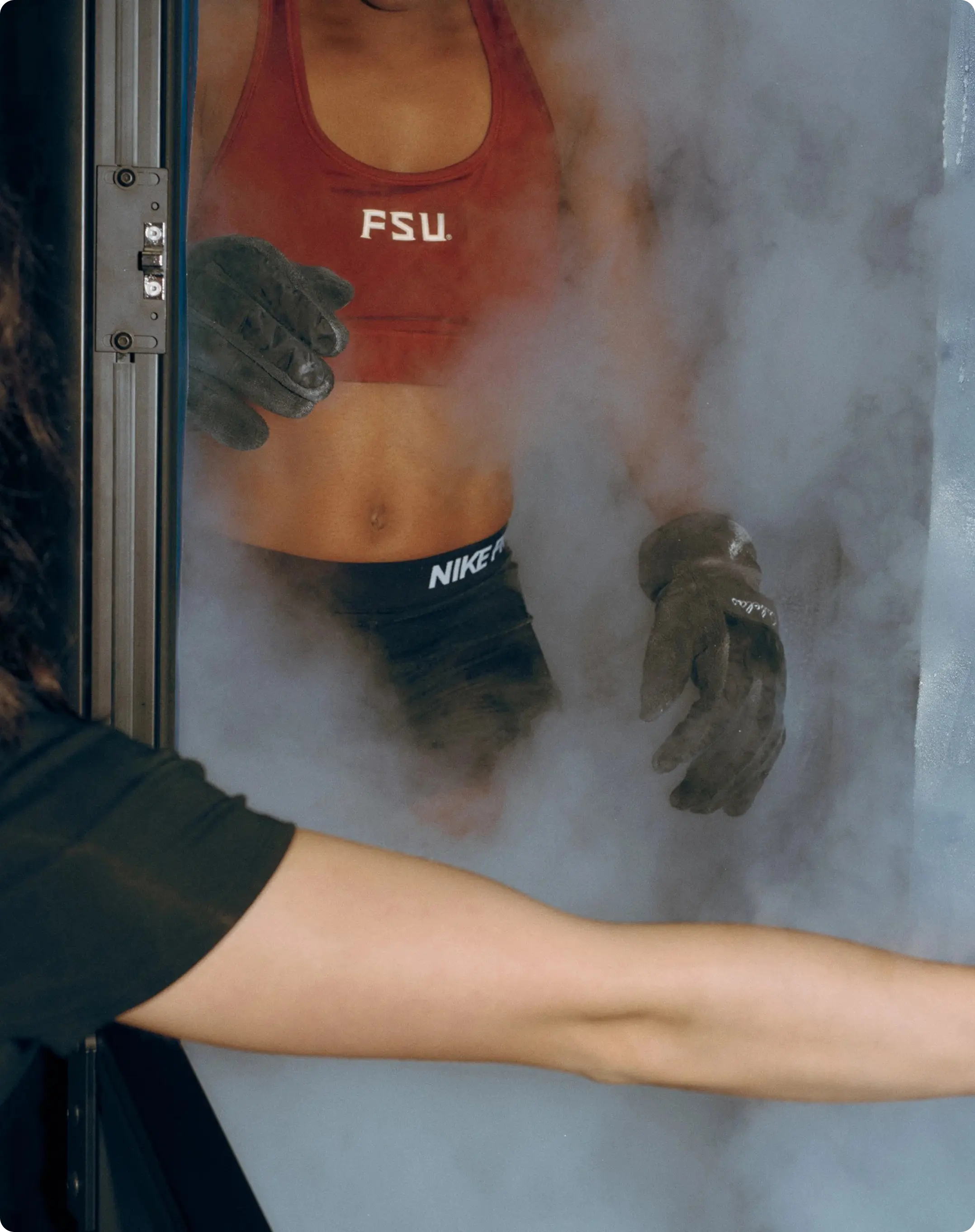
This is where the research gets interesting, and where marketing tends to outrun the data. A well-controlled study of 31 marathon runners comparing whole-body cryotherapy, cold water immersion, and a placebo group found that a single cryotherapy session performed no better than placebo on inflammatory and muscle damage markers, and was even slightly less effective than cold water immersion for restoring muscle function. But that finding applies specifically to oneoff exposure. A separate trial using repeated whole-body cryotherapy across four consecutive days after strenuous running found it did reduce acute inflammatory markers including CRP and IL-1β compared to passive recovery, and a study of elite athletes using multiple exposures over seven days found reduced oxidative stress and inflammatory markers versus controls. The pattern across the literature is consistent: a single cryotherapy session post-race is unlikely to outperform a good ice bath, but a structured multi-day protocol shows a real anti-inflammatory signal that single exposure studies miss.
💆✨ Massage
Massage has one of the more consistent evidence bases of any recovery modality. A meta-analysis of 11 randomised controlled trials covering 504 participants found massage significantly reduced muscle soreness at 24, 48 and 72 hours post-exercise, improved measures of muscle strength and peak torque, and lowered creatine kinase compared to no intervention. Interestingly, the soreness-reducing effect was strongest when massage was delivered 48 to 72 hours after exercise rather than immediately, suggesting the day-two or day-three window matters more than getting on the table straight after the race.
🧦 Compression Garments
Compression tights and calf sleeves have a moderate evidence base. Meta-analyses have found compression garments produce small but statistically significant improvements in the recovery of muscle strength and power after fatiguing exercise, with the strongest effects seen when garments are worn for extended periods post-exercise rather than briefly. Effects on soreness and swelling are generally more reliable than effects on actual performance metrics, and the benefit appears to depend heavily on pressure and fit, which most off-the-shelf garments do not standardise well.
😴 Sleep
Sleep is the recovery tool almost nobody treats as a therapy, and it may be the most important one. Controlled research restricting sleep to four hours a night for five nights found myofibrillar protein synthesis dropped by roughly 18 to 19 percent compared to normal sleep, and a single night of total sleep deprivation has been shown to measurably suppress muscle protein synthesis pathways in humans10. If you run a marathon and then get a poor night's sleep to "make up for lost time," you are actively working against the repair process your body needs most.
Who Should Be Cautious
| Modality | Caution or contraindication |
|---|---|
| Cold water immersion / cryotherapy | Cardiovascular disease, uncontrolled hypertension, Raynaud's phenomenon, cold urticaria, pregnancy, open wounds |
| Compression garments | Peripheral arterial disease, active DVT or clotting disorders |
| HBOT | Untreated pneumothorax, certain ear/sinus conditions, some chemotherapy agents |
| Massage | Acute DVT, unhealed fractures, some skin infections |
None of these are reasons to avoid recovery therapy altogether. They're reasons to have a real conversation with the practitioner beforehand rather than assuming every modality suits every body.
What Elite and Recreational Marathoners Actually Do
The most consistent finding across surveys of elite endurance athletes is that the interventions with the strongest evidence, sleep, cold water immersion and massage, are used far less than the ones with weaker support. One survey of 153 elite endurance track and field athletes found sauna use, massage and daytime napping were the most common recovery habits, while genuinely evidence-backed tools like cold water immersion and compression garments were used by only 15 percent and under 8 percent of athletes respectively. In practice, most runners are recovering based on habit and comfort rather than what the data supports, which is precisely why a structured, evidence-led approach creates an edge rather than just a placebo effect.
How Cryo SubZero Approaches Marathon Recovery
We don't sell single-modality miracle cures, because the evidence doesn't support them. What we do run is a stacked, sequenced recovery protocol built around what the research actually shows works together. Our whole-body cryotherapy chamber runs to −115°C, colder than most commercial chambers in Melbourne, which matters given the dose-response relationship seen in the cold therapy literature. For runners managing a lingering injury alongside marathon training rather than routine post-race soreness, our dual-occupancy hyperbaric oxygen chamber supports genuine tissue repair, and its dual-occupancy design means a parent, support worker, or training partner can sit through the session with you. We pair sessions with lymphatic drainage to support fluid clearance and infrared sauna for circulation, and our protocols are overseen by Dr Zeeshan Siddiqui and Dr Aftab Samdani, meaning your recovery plan is built around your actual physiology rather than a generic package. If you've got a marathon on the calendar, book your recoverysession for the same week, not as an afterthought once you're already sore.
References
- Impact of different doses of cold water immersion on recovery from acute exercise-induced muscle damage: a network meta-analysis. Frontiers in Physiology, 2025. doi.org/10.3389/fphys.2025.1525726
- Difranco I, et al. A combination of cherry juice and cold water immersion does not enhance marathon recovery compared to either treatment in isolation. Frontiers in Sports and Active Living, 2022. doi.org/10.3389/fspor.2022.957950
- Siqueira AF, et al. Multiple cold-water immersions attenuate muscle damage but not systemic inflammation and muscle function recovery. Scientific Reports, 2018. doi.org/10.1038/s41598-018-28942-5
- Recovery following a marathon: a comparison of cold water immersion, whole body cryotherapy and a placebo control. European Journal of Applied Physiology, 2017. link.springer.com/article/10.1007/s00421-017-3757-z
- Time-course of changes in inflammatory response after whole-body cryotherapy multi-exposures following severe exercise. PLOS ONE, 2011. doi.org/10.1371/journal.pone.0022748
- Multiple cryotherapy attenuates oxi-inflammatory response following skeletal muscle injury. PMC, 2020. ncbi.nlm.nih.gov/pmc/articles/PMC7663269
- Guo J, et al. Massage alleviates delayed onset muscle soreness after strenuous exercise: a systematic review and meta-analysis. Frontiers in Physiology, 2017. doi.org/10.3389/fphys.2017.00747
- Compression garments and recovery from exercise-induced muscle damage: a meta-analysis. British Journal of Sports Medicine, and Effects of Compression Garments on Muscle Strength and Power Recovery Post-Exercise: A Systematic Review and Meta-Analysis, Life (MDPI), 2025. mdpi.com/2075-1729/15/3/438
- Morton RW, et al. The effect of sleep restriction, with or without high-intensity interval exercise, on myofibrillar protein synthesis in healthy young men. Journal of Physiology, 2020.PMID: 32078168
- The effect of acute sleep deprivation on skeletal muscle protein synthesis andthe hormonal environment. bioRxiv, 2020. biorxiv.org/content/10.1101/2020.03.09.984666v1
- Effects of pre-, post- and intra-exercise hyperbaric oxygen therapy on performance and recovery: a systematic review and meta-analysis. PMC, 2021. ncbi.nlm.nih.gov/pmc/articles/PMC8650584
- Prevalence of use of various post-exercise recovery methods among elite endurance athletes. Referenced in compression garment recovery literature review, 2025.